
Crawford Creek Regional Park.
Photo by Bohdan Doval
PURPOSE-ECOSYSTEM™ DESIGN
Purpose-Ecosystems™ don't just convert attention into commitment. They create the conditions for both sides to benefit, and keep benefiting long after the engagement ends.
Purpose-Ecosystem™ Design follows Marketing Triage™. If you haven't yet diagnosed which system failure is costing you outcomes, that's the right place to start.


Everything you were taught about marketing was built around attention.
Everything that actually works was built around people.
WHAT IT IS
Marketing Triage™ diagnoses which system failure is costing you outcomes. Purpose-Ecosystem™ Design replaces that system with one designed from the ground up to facilitate human connection because connection is the cornerstone of commitment.
Not a campaign. Not a rebrand. Not a content strategy. A system where both the organization and the people it serves genuinely benefit, which is the only condition under which a system sustains itself.
These ecosystems often take on a life of their own. The forest campaign we designed 35 years ago is still a provincial park. The festival partnership we launched is still generating revenue 25 years later. The recruitment ecosystem we built hired three senior engineers, when the goal was one.
When both sides benefit, the system doesn't need to be maintained. It grows.
Every ecosystem in this section began with the same act: seeing the person nobody else in the brief had bothered to look at. The engineer's family lying awake at night across an ocean. The business leader who had never been given a way to feel what was happening in other people's homes. The student who wanted an identity worth wearing, not a petition to sign.
"Your brand is the story that plays in people's heads whenever they think of you. Every touchpoint is your attempt to write the script.
Purpose-Ecosystem™ Design gives both sides a role in writing it."
NOT TO BE CONFUSED WITH
Campaigns run and end. Brand strategy defines who you are. Content strategy fills calendars.
Purpose-Ecosystem™ design builds the infrastructure that converts the attention that all three generate into the commitment you need: hires, donations, safety, partnerships, participation, and revenue.
These aren't values statements. They're structural conditions. When all three are present, the system self-perpetuates. When anyone is missing, it slowly fails.
01
Conventional marketing identifies a pain and interrupts someone's day to offer a solution.
Purpose-Ecosystem™ design starts from a different premise: the people you need to reach are already on a journey — a career decision, a community decision, a mission decision. Your job is to remove friction from their journey, not convince them to take yours.
When people feel treated as heroes rather than targets, they don't just commit. They recruit others.
02
A symbiotic system is one in which both parties benefit from the exchange. This isn't a feel-good principle. It's the structural reason ecosystems sustain themselves. When one side extracts value from the other, the relationship degrades. When both sides create value together, the relationship compounds.
The forest campaign worked because students became environmental heroes, retailers gained community credibility, and the forest was protected. Nobody was just a target. Everyone was a co-author.
The t-shirts that funded five years on the road were not designed to generate attention. They were designed to give students an identity worth wearing, forest protectors, not protesters. When the creative work gives people something to become rather than something to respond to, the system does not need a campaign to sustain it. It sustains itself.
03
Every element of a purpose-ecosystem is designed to answer the questions people ask before they commit, not to interrupt them with messages they didn't request.
The measure of success is commitment: hires, donations, partnerships, memberships, participation. Not impressions, reach, or engagement scores.
This changes everything about how materials are designed, how events are structured, how follow-up works, and how success is measured.
Every engagement begins with Marketing Triage™. Once we know what's broken and which system failure is primary, we design the replacement. The process varies by organization (complexity, silo depth, the number of touchpoints involved), but the structure is consistent.
01
Marketing Triage™ is the diagnostic prerequisite. It identifies the primary system failure, the incentive structures that perpetuate it, and what to fix first. We don't design a new system without knowing what failed in the existing one.
Designing without diagnosing produces a better-designed version of the same problem.
02
Every purpose-ecosystem is focused on a singular goal. Not "awareness" or "engagement." A specific, measurable commitment:
- hire a senior engineer
- increase festival merchandise revenue.
- reduce workplace accidents.
The singular focus is what makes the ecosystem coherent.
Diffuse systems produce diffuse results.
03
Who is the person making this decision? What are they already trying to accomplish? What questions do they ask before they commit? What friction stands between them and the decision? We map the decision from the person's perspective, not the organization's pipeline, and design every touchpoint to reduce friction and increase agency.
People who feel genuinely seen connect. People who connect and are empowered commit. People who feel targeted resist.
04
Every meaningful change has stakeholders who believe they will lose if you succeed. These people don't disappear when you ignore them. They become friction, opposition, or silent saboteurs.
Identifying them early is a structural requirement, not a political courtesy.
Conventional approaches marginalize these stakeholders or argue past them. Purpose-Ecosystem™ Design does something different: it treats perceived loss as a design problem. If someone believes they lose when you win, the system isn't finished yet.
05
The most powerful design move in purpose-ecosystem work is refusing the premise that one side's gain requires the other's loss. When both sides are locked in an either/or, the job isn't to pick a winner. It's to find a third design neither side had considered.
The forest campaign began with two sides that each believed the other's success meant their failure. The logging industry needed the timber. The community needed the ecosystem.
Both beliefs were legitimate. Neither was complete.
We brought the sides together to explore a third way: a community mill that selectively harvested eco-certified timber from land outside the proposed park boundary. The mill would provide sustained employment. The forest would be protected permanently. The either/or became irrelevant.
Decades later, the mill is still operating, and the forest is West Arm Provincial Park, protected forever.
That is what finding the AND looks like.
Not compromise, where both sides get less. A new design, where both sides get more.
06
The system includes every touchpoint that influences the decision to commit: materials, events, follow-up sequences, recognition structures, community design, physical objects, and digital environments. Each element is designed to answer a specific question the person is already asking. Nothing is included because it feels like marketing.
Everything earns its place by answering a question the person is already asking.
07
The measurement system is redesigned alongside the engagement system. We believe in measuring commitment metrics. Not attention metrics. Hires made, not applications received. Donations sustained, not events attended. Partnerships formed, not meetings held.
Measuring the right things is itself a form of system design.
It changes what gets optimized.
Most marketing work optimizes the tactics inside a broken system. Purpose-Ecosystem™ Design replaces the system.
65K
ACRES PROTECTED FOREVER
35+
YEARS LATER, STILL THRIVING

The challenge: Protect a 65,000-acre endangered forest in British Columbia with no marketing budget and no institutional backing.
The ecosystem: We mobilized 180 retailers and thousands of students by treating them as empowered heroes on a shared journey, not targets to convince. T-shirts became identity markers. Petitions became tools for action. Recognition systems celebrated each contribution. Every element was designed to answer the question: What does a person committed to this cause do next?
We didn't ask people to care about a forest. We gave people who already cared a story worth joining, and a role in writing it. And we worked to find a third way for those who stood to lose — a community mill using eco-certified timber from land outside the park boundary, providing jobs without requiring the proposed park's forests.
The result: The forest is now the West Arm Provincial Park, protected forever. The mill continues to provide employment. 35 years later, both sides are still winning. This is where the methodology was born, and why it has never changed.
3×
ENGINEERS HIRED. GOAL WAS ONE
25%
COMMITMENT RATE.

The challenge: Recruit a senior engineer to relocate from the UK to Canada during a competitive labour shortage. The competition handed out hats. We designed a system.
The ecosystem: A complete family relocation ecosystem: a custom photo album showcasing three potential Canadian cities, plus a comprehensive family resource guide covering schools, taxation, real estate, professional licensing, and community resources. Every page answered a relocation question before the family asked it. Each section positioned the candidate and their family as heroes making a life-changing decision, not targets being sold a job.
We didn't sell the company. We removed friction from the decision that the family was already trying to make.
The result: Hired 3 senior engineers (goal was 1). 25% commitment rate. Two national marketing awards. National press coverage. Decade-long partnership: 300 → 1,200 employees.
25+
YEAR PARTNERSHIP ONGOING
300%
MERCH SALES GROWTH YEAR ONE
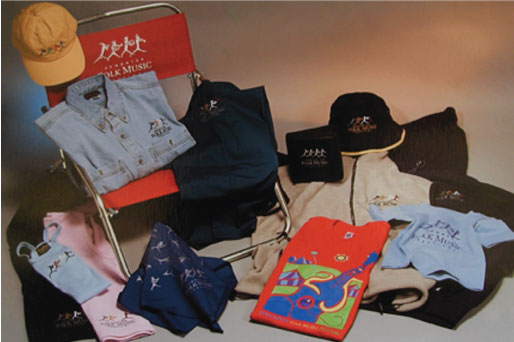
The challenge: Turn branded merchandise into a sustained revenue stream for a beloved festival.
The ecosystem: We designed products for different audience segments, treating attendees not as consumers to sell souvenirs to, but as people who wanted to carry a piece of the festival's identity. Every item was designed to answer a question: What does it mean to be part of this community?
The ecosystem designed the products, the presentation, the storytelling, and the segmentation simultaneously. None of those elements works in isolation. Together, they created something that felt like belonging, not retail.
The result: 300% growth in merchandise sales in year one. A partnership that has now lasted 25+ years and continues to generate reliable, festival-sustaining revenue, long after any individual campaign or product has come and gone.
40+
STRATEGY SHARED WITH 40 SHELTERS NATIONWIDE
10+
YEARS LATER, EARLY DETECTION PROGRAMS STILL RUNNING

The challenge: Raise funds for provincial women's shelters and close a significant gap between what shelters needed and what the government was providing — by reaching male business leaders who had no existing connection to the issue.
The approach: We were asked to supply a giveaway for a breakfast fundraiser. We asked to allocate more of the budget to commitment and less to a giveaway. They agreed.
The real goal was to move male business leaders from indifference to action, without triggering defensiveness or guilt. So we didn't lead with the problem. We led with light.
A trifold card opened with facts about light: that it travels at 300,000 kilometres per second, that it takes eight minutes and twenty seconds to travel from the sun to Earth. Inside the card was a flat, branded flashlight. Then the card shifted:
"Now that we have shared some facts about light, let's shed some light on the facts."
Every statistic that followed was framed in the same terms. In the time it takes light to reach our eyes from the sun, nine women in Canada will be assaulted by an intimate partner. In the time it takes our planet to orbit the sun, 13,000 women and children will be assisted by Alberta's shelters.
An equal number will be turned away.
The final fold showed them how to help.
The flashlight wasn't a giveaway. It was the argument. It was something physical that connected every statistic to a single idea: this is happening right now, while you are holding this.
The result: The promotion was expanded to two additional Alberta jurisdictions. Then the federal government adopted it as an example for 40 women's shelters nationwide.
As with many Purpose-Ecosytems, it took on a life of its own, with multiple business leaders setting up early-detection and support programs within their organizations. More than a decade later, many of those programs are still running.
"The best marketing we've ever built didn't require us to keep paying for it. The forest is still protected. The festival partnership is still generating revenue. The engineers are still there. When both sides genuinely benefit, the system finds a way to sustain itself."
35+
Years, West Arm
Forest protected
25+
Years, Festival Partnership
6000%
B2B ROI Within 6 Months
40+
Orgs Scaled ACWS Example
We don't design a new system without diagnosing what failed in the existing one. Purpose-Ecosystem™ Design requires Triage™ as the prerequisite engagement. This isn't a gatekeeping policy. It's the reason the designs work. Designing without a diagnosis produces beautiful dysfunction.
A purpose-ecosystem isn't a marketing tool. It's an organizational asset, one that generates commitment, builds community, and often outlasts any individual campaign, product, or leadership team that created it.
When the forest is still protected 35 years later, when the festival partnership is still generating revenue after 25 years, when the engineers are still there — that's not the result of a campaign.
That's the result of a system designed for both sides to win.
Investment is scoped based on organizational complexity and the number of touchpoints involved. Discussed after Triage.
Prefer to reach out directly?
+1 (780) 474 • 6563
We Help Good People Do Better Marketing
Do Better Marketing
(a division of Avatar Brand Management Inc.)
Do Better Marketing sees the person behind the role. That act of seeing has protected forests, changed how business leaders see domestic violence, and hired senior engineers. Marketing Triage™. Purpose-Ecosystem™ Design. Dimensional Storytelling™. Symbiotic Systems Methodology. GreenMeets™. Edmonton, Alberta.
Promotional Products Edmonton · Branded Merchandise Edmonton · Custom T-Shirt Printing Edmonton · DTF Printing Edmonton
© 2026 All Rights Reserved
